

san
Αυτές τις γιορτές, ο Αη-Βασίλης
φέρνει περισσότερα και...καλύτερα βιβλία
για όλους!
Location
Payment icons
Έχεις μια καλύτερη τιμή γι αυτό το βιβλίο;
Γίνε συνεργάτης και καταχώρησε την προσφορά σου!
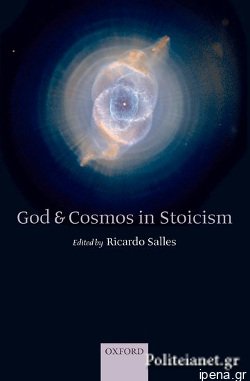
Γίνετε Πωλητής / Υποβολή Προσφοράς(H/B) GOD AND COSMOS IN STOICISM
Περιγραφή
This is a collective study, in nine new essays, of the close connection between theology and cosmology in Stoic philosophy. The Stoic god is best described as the single active physical principle that governs the whole cosmos. The first part of the book covers three essential topics in Stoic theology: the active and demiurgical character of god, his corporeal nature and irreducibility to matter, and fate as the network of causes through which god acts upon the cosmos. The second part turns to Stoic cosmology, and how it relates to other cosmologies of the time. The third part examines the ethical and religious consequences of the Stoic theories of god and cosmos. (From the publisher) + Περιεχόμενα Introduction: God and Cosmos in Stoicism, Ricardo Salles Part I: God, providence, and fate 1: How industrious can Zeus be? The extent and objects of divine activity in Stoicism., Thomas Benatouil 2: The Stoics on matter and prime-matter: corporealism and the imprint of Plato's Timaeus, Jean-Baptiste Gourinat 3: Chain of causes: what is Stoic Fate?, Susan Sauve Meyer Part II: Elements, cosmogony and conflagration 4: Chrysippus on Physical Elements, John Cooper 5: Chrysippus on conflagration and the indestructibility of the cosmos, Ricardo Salles 6: Stoic Themes in Peripatetic physics?, Inna Kupreeva Part III: The ethics and religion of Stoic cosmo-theology 7: Does cosmic nature matter? Some reflections on the cosmological aspects of Stoic ethics, Marcelo Boeri 8: Why Physics?, Brad Inwood 9: Stoic Philosophical Theology and Graeco-Roman Religion, Keimpe Algra +
Χρόνος αποστολής και χρεώσεις:
Χρόνος αποστολής και χρεώσεις:
Συγνώμη, δέν μπορέσαμε να βρούμε επιλογές αποστολής για την τοποθεσία σας. Παρακαλώ επικοινωνήστε μαζί μας και θα δούμε τι μπορούμε να κάνουμε για αυτό

Λεπτομερειες
Εκδότης
ISBN
Σελίδες
Έκδοση
Τύπος
Κατάσταση
Διαστάσεις
Συνδεθείτε για να μπορέσουμε να σας ειδοποιήσουμε σχετικά με μια απάντηση