Λάθος
LESS parse error: failed at `{if $products}
` line: 307


san
Αυτές τις γιορτές, ο Αη-Βασίλης
φέρνει περισσότερα και...καλύτερα βιβλία
για όλους!
Location
Payment icons
Έχεις μια καλύτερη τιμή γι αυτό το βιβλίο;
Γίνε συνεργάτης και καταχώρησε την προσφορά σου!
Γίνετε Πωλητής / Υποβολή Προσφοράς(H/B) PHILOSOPHY AND CONCEPTUAL ART
Περιγραφή
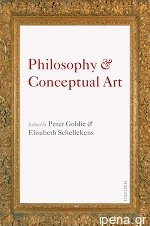
The fourteen prominent analytic philosophers writing here engage with the cluster of philosophical questions raised by conceptual art. They address four broad questions: What kind of art is conceptual art? What follows from the fact that conceptual art does not aim to have aesthetic value? What knowledge or understanding can we gain from conceptual art? How ought we to appreciate conceptual art? Conceptual art, broadly understood by the contributors as beginning with Marcel Duchamp's ready-mades and as continuing beyond the 1970s to include some of today's contemporary art, is grounded in the notion that the artist's 'idea' is central to art, and, contrary to tradition, that the material work is by no means essential to the art as such. To use the words of the conceptual artist Sol LeWitt, 'In conceptual art the idea of the concept is the most important aspect of the work . . . and the execution is a perfunctory affair'. Given this so-called 'dematerialization' of the art object, the emphasis on cognitive value, and the frequent appeal to philosophy by many conceptual artists, there are many questions that are raised by conceptual art that should be of interest to analytic philosophers. Why, then, has so little work been done in this area? This volume is most probably the first collection of papers by analytic Anglo-American philosophers tackling these concerns head-on. (From the publisher) + Περιεχόμενα Introduction I. Conceptual art as a kind of art Peter Lamarque: On perceiving conceptual art Derek Matravers: The dematerialization of the art object Gregory Currie: The ontology of conceptual art Robert Hopkins: Speaking through silence: conceptual art and conversational implicature II. Conceptual art and aesthetic value Elisabeth Schellekens: The aesthetic value of ideas Diarmuid Costello: Kant After LeWitt: Towards an aesthetics of conceptual art III. Conceptual art, knowledge and understanding Carolyn Wilde: Mind and matter in the work of art: One and Three Chairs David Davies: Telling Pictures: the place of narrative in late modern 'visual art' Peter Goldie: Conceptual art and knowledge Kathleen Stock: Sartre, Wittgenstein, and learning from imagination IV. Appreciating conceptual art Matthew Kieran: Artistic character, creativity, and the appreciation of conceptual art Margaret Boden: Creativity and conceptual art Dominic McIver Lopes: Conceptual art is not what it seems Art & Language: Emergency Conditionals +
Χρόνος αποστολής και χρεώσεις:
Χρόνος αποστολής και χρεώσεις:
Συγνώμη, δέν μπορέσαμε να βρούμε επιλογές αποστολής για την τοποθεσία σας. Παρακαλώ επικοινωνήστε μαζί μας και θα δούμε τι μπορούμε να κάνουμε για αυτό

Λεπτομερειες
Εκδότης
ISBN
Σελίδες
Έκδοση
Τύπος
Κατάσταση
Διαστάσεις
Συνδεθείτε για να μπορέσουμε να σας ειδοποιήσουμε σχετικά με μια απάντηση