
Location
Payment icons
Έχεις μια καλύτερη τιμή γι αυτό το βιβλίο;
Γίνε συνεργάτης και καταχώρησε την προσφορά σου!
Γίνετε Πωλητής / Υποβολή Προσφοράς(P/B) AN ESSAY CONCERNING HUMAN UNDERSTANDING // SECOND TREATISE OF GOVERNMENT
Περιγραφή
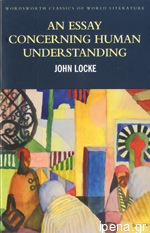
John Locke (1632 - 1704) was perhaps the most influential English writer of his time. His Essay concerning Human Understanding (1690) and Two Treatises of Government (1690) weighed heavily on the history of ideas in the eighteenth century, and Locke's works are often -rightly- presented as foundations of the Age of Enlightenment. Both the Essay and the Second Treatise (by far the more influential of the Two Treatises) were widely read by Locke's contemporaries and near contemporaries. His eighteenth-century readers included philosophers, historians and political theorists, but also community and political leaders, engaged laypersons, and others eager to participate in the expanding print culture of the era. His epistemological message that the mind at birth was a blank slate, waiting to be filled, complemented his political message that human beings were free and equal and had the right to create and direct the governments under which they lived. Today, Locke continues to be an accessible author. He provides food for thought to university professors and their students, but has no less to offer the general reader who is eager to enjoy the classics of world literature. (From the publisher) + Περιεχόμενα INTRODUCTION FURTHER READING AN ESSAY CONCERNING HUMAN UNDERSTANDING The Epistle Dedicatory The Epistle to the Reader BOOK 1: Of Innate Notions Analytical Contents Introduction No innate principles in the mind No innate practical principles Other considerations concerning innate principles, both speculative and practical BOOK 2: Of Ideas Analytical contents Of ideas in general, and their original Of simple ideas Of ideas of one sense Of solidity Of simple ideas of divers senses Of simple ideas of reflection Of simple ideas of both sensation and reflection Some further considerations concerning our simple ideas Of perception Of retention Of discerning, and other operations of the mind Of complex ideas Complex ideas of simple modes: and first, of the simple modes of the idea of space Of duration and its simple modes Of duration and expansion, considered together Of number Of infinity Of other simple modes Of the modes of thinking Of modes of pleasure and pain Of power Of mixed modes Of our complex ideas of substances Of collective ideas of substances Of relation Of cause and effect, and other relations Of identity and diversity Of other relations Of clear and obscure, distinct and confused ideas Of real and fantastical ideas Of adequate and inadequate ideas Of true and false ideas Of the association of ideas BOOK 3: Of Words Analytical Contents Of words or language in general Of the signification of words Of general terms Of the names of simple ideas Of the names of mixed modes and relations Of the names of substances Of particles Of abstract and concrete terms Of the imperfection of words Of the abuse of words Of the remedies of the foregoing imperfections and abuses BOOK 4: Of knowledge and probability Analytical Contents Of knowledge in general Of the degrees of our knowledge Of the extent of human knowledge Of the reality of knowledge Of truth in general Of universal propositions: their truth and certainty Of maxims Of trifling propositions Of our knowledge of existence Of our knowledge of the existence of a God Of our knowledge of the existence of other things Of the improvement of our knowledge Some further considerations concerning our knowledge Of judgment Of probability Of the degrees of assent Of reason Of faith and reason, and their distinct provinces Of enthusiasm Of wrong assent, or error Of the division of the sciences SECOND TREATISE OF GOVERNMENT 1764 Editor's note Preface Of the state of nature Of the state of war Of slavery Of property Of paternal power Of political or civil society Of the beginning of political societies Of the ends of political society and government Of the forms of a commonwealth Of the extent of the legislative power Of the legislative, executive, and federative power of the commonwealth Of the subordination of the powers of the commonwealth Of prerogative Of paternal, political, and despotical power, considered together Of conquest Of usurpation Of tyranny Of the dissolution of government +
Χρόνος αποστολής και χρεώσεις:
Χρόνος αποστολής και χρεώσεις:
Συγνώμη, δέν μπορέσαμε να βρούμε επιλογές αποστολής για την τοποθεσία σας. Παρακαλώ επικοινωνήστε μαζί μας και θα δούμε τι μπορούμε να κάνουμε για αυτό

Λεπτομερειες
Εκδότης
ISBN
Σελίδες
Έκδοση
Τύπος
Κατάσταση
Διαστάσεις
Συνδεθείτε για να μπορέσουμε να σας ειδοποιήσουμε σχετικά με μια απάντηση
Συγγραφέας: LOCKE JOHN
