

san
Αυτές τις γιορτές, ο Αη-Βασίλης
φέρνει περισσότερα και...καλύτερα βιβλία
για όλους!
Location
Payment icons
Έχεις μια καλύτερη τιμή γι αυτό το βιβλίο;
Γίνε συνεργάτης και καταχώρησε την προσφορά σου!
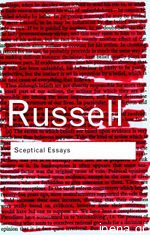
Γίνετε Πωλητής / Υποβολή Προσφοράς(P/B) SCEPTICAL ESSAYS
Περιγραφή
"These propositions may seem mild, yet, if accepted, they would absolutely revolutionize human life." With these words Bertrand Russell introduces what is indeed a revolutionary book. Taking as his starting-point the irrationality of the world, he offers by contrast something 'wildly paradoxical and subversive' - a belief that reason should determine human actions. Today, besieged as we are by the numbing onslaught of twenty-first-century capitalism, Russell's defence of scepticism and independence of mind is as timely as ever. In clear, engaging prose, he guides us through the key philosophical issues that affect our daily lives - freedom, happiness, emotions, ethics and beliefs - and offers no-nonsense advice. (From the publisher) + Περιεχόμενα Preface to the Routledce Classics Edition - Introduction: On the Value of Scepticism - Dreams and Facts - Is Science Superstitious? - Can Men be Rational? - Philosophy in the Twentieth Century - Machines and the Emotions - Behaviourism and Values - Eastern and Western Ideals of Happiness - The Harm that Good Men Do - The Recrudescence of Puritanism - The Need for Political Scepticism - Free Thought and Official Propaganda - Freedom in Society - Freedom Versus Authority in Education - Psychology and Politics - The Danger of Creed Wars - Some Prospects: Cheerful and Otherwise INDEX +
Χρόνος αποστολής και χρεώσεις:
Χρόνος αποστολής και χρεώσεις:
Συγνώμη, δέν μπορέσαμε να βρούμε επιλογές αποστολής για την τοποθεσία σας. Παρακαλώ επικοινωνήστε μαζί μας και θα δούμε τι μπορούμε να κάνουμε για αυτό

Λεπτομερειες
Εκδότης
ISBN
Σελίδες
Έκδοση
Τύπος
Κατάσταση
Διαστάσεις
Συνδεθείτε για να μπορέσουμε να σας ειδοποιήσουμε σχετικά με μια απάντηση
Συγγραφέας: RUSSELL BERTRAND
