
Location
Payment icons
Έχεις μια καλύτερη τιμή γι αυτό το βιβλίο;
Γίνε συνεργάτης και καταχώρησε την προσφορά σου!
Γίνετε Πωλητής / Υποβολή Προσφοράς(P/B) CONSTELLATION MYTHS // WITH ARATUS'S PHAENOMENA
Περιγραφή
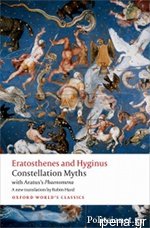
The constellations we recognize today were first mapped by the ancient Greeks, who arranged the stars into patterns for that purpose. In the third century BC Eratosthenes compiled a handbook of astral mythology in which the constellations were associated with figures from legend, and myths were provided to explain how each person, creature, or object came to be placed in the sky. Thus we can see Heracles killing the Dragon, and Perseus slaying the sea-monster to save Andromeda; Orion chases the seven maidens transformed by Zeus into the Pleiades, and Aries, the golden ram, is identified flying up to the heavens. This translation brings together the later summaries from Eratosthenes' lost handbook with a guide to astronomy compiled by Hyginus, librarian to Augustus. Together with Aratus's astronomical poem the Phaenomena, these texts provide a complete collection of Greek astral myths; imaginative and picturesque, they also offer an intriguing insight into ancient science and culture. (From the publisher) + Περιεχόμενα The only comprehensive compendium of the ancient myths of the stars and constellations, including the two main sources, Eratosthenes and Hyginus, together with Aratus' Phaenomena, the earliest surviving account of the Greek constellations. A fascinating collection of mythological stories covering the constellations of the zodiac, the northern and southern skies, and the Milky Way. Myths include the stories of Europa, Orion's pursuit of the Pleiades, the kneeling Heracles, Pegasus, Perseus and Andromeda, the golden ram, and many more. Includes an introduction that explains the nature and origin of the myths, notes, an index, and maps of the northern and southern skies, picturing the constellations at the time when the texts were written. Appendix includes extracts from Geminos, Introduction to the Phaenomena, a textbook on astronomy from the 1st century AD. +
Χρόνος αποστολής και χρεώσεις:
Χρόνος αποστολής και χρεώσεις:
Συγνώμη, δέν μπορέσαμε να βρούμε επιλογές αποστολής για την τοποθεσία σας. Παρακαλώ επικοινωνήστε μαζί μας και θα δούμε τι μπορούμε να κάνουμε για αυτό

Λεπτομερειες
Εκδότης
ISBN
Σελίδες
Έκδοση
Τύπος
Κατάσταση
Συνδεθείτε για να μπορέσουμε να σας ειδοποιήσουμε σχετικά με μια απάντηση