Location
Payment icons
Έχεις μια καλύτερη τιμή γι αυτό το βιβλίο;
Γίνε συνεργάτης και καταχώρησε την προσφορά σου!
Γίνετε Πωλητής / Υποβολή Προσφοράς(P/B) EMANCIPATION(S)
Περιγραφή
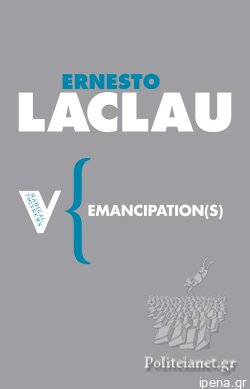
Laclau argues that the changes of the late twentieth century have altered Enlightenment notions of emancipation. In Emancipation(s), Ernesto Laclau addresses a central question: how have the changes of the last decade, together with the transformation in contemporary thought, altered the classical notion of "emancipation" as formulated since the Enlightenment? Our visions of the future and our expectations of emancipation, have been deeply affected by the changes of recent history: the end of the Cold War, the explosion of new ethnic and national identities, the social fragmentation under late capitalism, and the collapse of universal certainties in philosophy and social and historical thought. Laclau here begins to explore precisely how our visions of emancipation have been recast under these new conditions. Laclau examines the internal contradictions of the notion of "emancipation" as it emerged from the mainstream of modernity, as well as the relation between universalism and particularism which is inherent in it. He explores the making of political identities and the status of central notions in political theory such as "representation" and "power," focusing particularly on the work of Derrida and Rorty. Emancipation(s) is a significant contribution to the reshaping of radical political thought. (From the publisher) + Περιεχόμενα EMANCIPATION (S) +
Χρόνος αποστολής και χρεώσεις:
Χρόνος αποστολής και χρεώσεις:
Συγνώμη, δέν μπορέσαμε να βρούμε επιλογές αποστολής για την τοποθεσία σας. Παρακαλώ επικοινωνήστε μαζί μας και θα δούμε τι μπορούμε να κάνουμε για αυτό

Λεπτομερειες
Εκδότης
ISBN
Σελίδες
Έκδοση
Τύπος
Κατάσταση
Διαστάσεις
Συνδεθείτε για να μπορέσουμε να σας ειδοποιήσουμε σχετικά με μια απάντηση
Συγγραφέας: LACLAU ERNESTO